
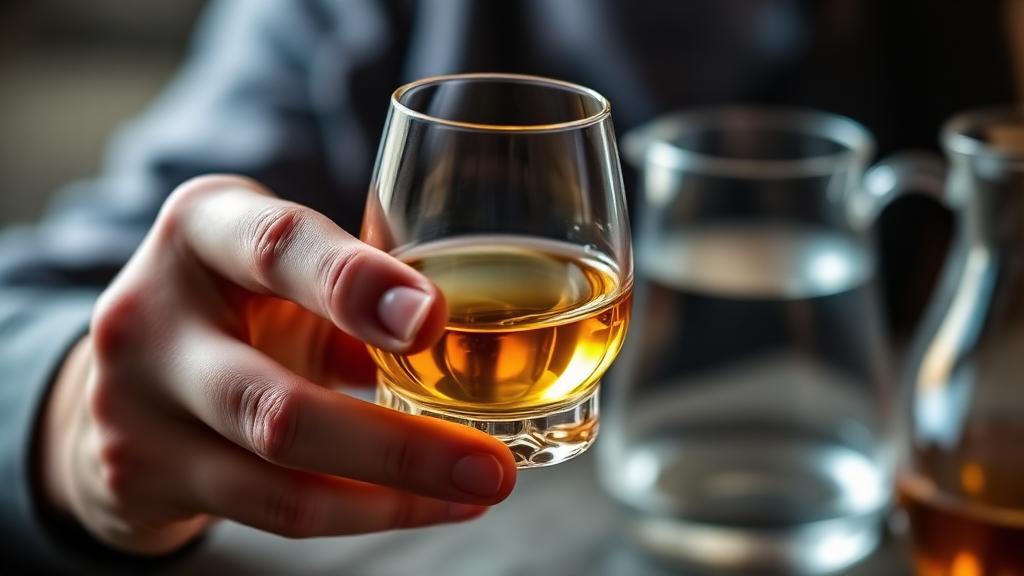
How to Taste Whisky
Nosing techniques, palate training exercises, and a complete flavour vocabulary — everything you need to taste whisky like a professional.
Most people drink whisky. Very few people taste it. The difference isn't pretension — it's attention. A $30 bottle can deliver a more rewarding experience than a $300 one if you know how to engage with it properly. Tasting whisky is a learnable skill, and like any skill, it improves dramatically with practice.
This guide covers the four stages of tasting, practical exercises to sharpen your nose and palate, and a vocabulary cheat sheet so you can articulate what you're experiencing. No gatekeeping, no snobbery — just practical techniques that work.
The Four Steps of Tasting
Every professional tasting follows this sequence. Master it and you'll extract more from every dram.
Observe
Hold your glass against a white background at a 45° angle. Tilt it gently and watch the liquid flow back.
- Colour tells you about cask type and age — pale gold suggests bourbon casks, deep amber indicates sherry maturation.
- Watch the 'legs' (rivulets that run down the glass). Slow, thick legs suggest higher ABV and viscosity.
- Clarity matters: a slight haze in non-chill-filtered whisky is a sign of quality, not a flaw.
Nose
This is where most of the flavour lives. Your nose detects thousands more compounds than your tongue.
- First pass: hold the glass at chest level, mouth slightly open. Let the aromas drift up naturally.
- Second pass: bring the glass to chin level. Breathe gently through your nose. What's the first thing you notice?
- Third pass: nose directly at the rim. Now you'll find the subtler notes — spice, leather, floral elements.
- Add a few drops of water and nose again. Water breaks surface tension and releases trapped volatiles.
Taste
Your palate confirms and expands what the nose suggested. Let the whisky coat your entire mouth.
- First sip: take a small amount to 'prime' your palate. Your mouth needs to acclimate to the alcohol.
- Second sip: a slightly larger amount. Roll it around your mouth. Note sweetness, sourness, and bitterness.
- Chew it: literally chew the whisky gently to aerate it. This releases more flavour compounds.
- Note the texture: is it oily and coating? Thin and crisp? Creamy? Texture is as important as flavour.
Finish
The finish is what separates good whisky from great whisky. Pay attention to what happens after you swallow.
- Length: how long do the flavours linger? Great whiskies have finishes that last for minutes.
- Evolution: does the flavour change as it fades? Look for spice or sweetness that emerges late.
- Warmth: where do you feel it? A pleasant chest warmth is typical of well-made spirits.
- Return: breathe out through your nose after swallowing to reveal hidden fruit or floral notes.
Tasting Vocabulary Cheat Sheet
A shared language for describing what you taste. Use these terms to communicate your experience.
Sweet
Fruity
Spice & Wood
Smoke & Earth
Pro Tips for Tasters
Your palate is sharpest in the late morning (10–11 AM). Professional blenders schedule their tastings accordingly.
Memory is unreliable. A simple notebook with date, whisky name, and 3–5 descriptors will accelerate your learning.
Whisky changes in the bottle once opened. Revisiting a bottle after 3 months often reveals notes you missed initially.
Other people's descriptions will unlock flavours you weren't finding. It helps build your scent memory library.
Frequently Asked Questions
A tulip-shaped glass (like a Glencairn) concentrates aromas at the rim and dramatically improves nosing compared to a tumbler. It's the single best investment for any whisky enthusiast.
Often, yes. A few drops of room-temperature water can open up a whisky dramatically — it breaks surface tension and releases trapped aroma compounds.
Take smaller sips, 'chew' the whisky to mix it with saliva, and breathe through your mouth while tasting. With practice, your palate acclimates and the burn fades.
You'll notice significant improvement after just 10–15 focused tastings. Focused attention is the key.
Always go from lightest to heaviest: unpeated before peated, lower ABV before cask strength, bourbon-matured before sherry-matured.
Continue Your Journey
Explore more guides, browse our collection of whiskies, or compare bottles side by side.
PourAtlas is an educational platform. We encourage responsible appreciation of whisky. Please enjoy responsibly.